Evidence-Based Policing Hall of Fame
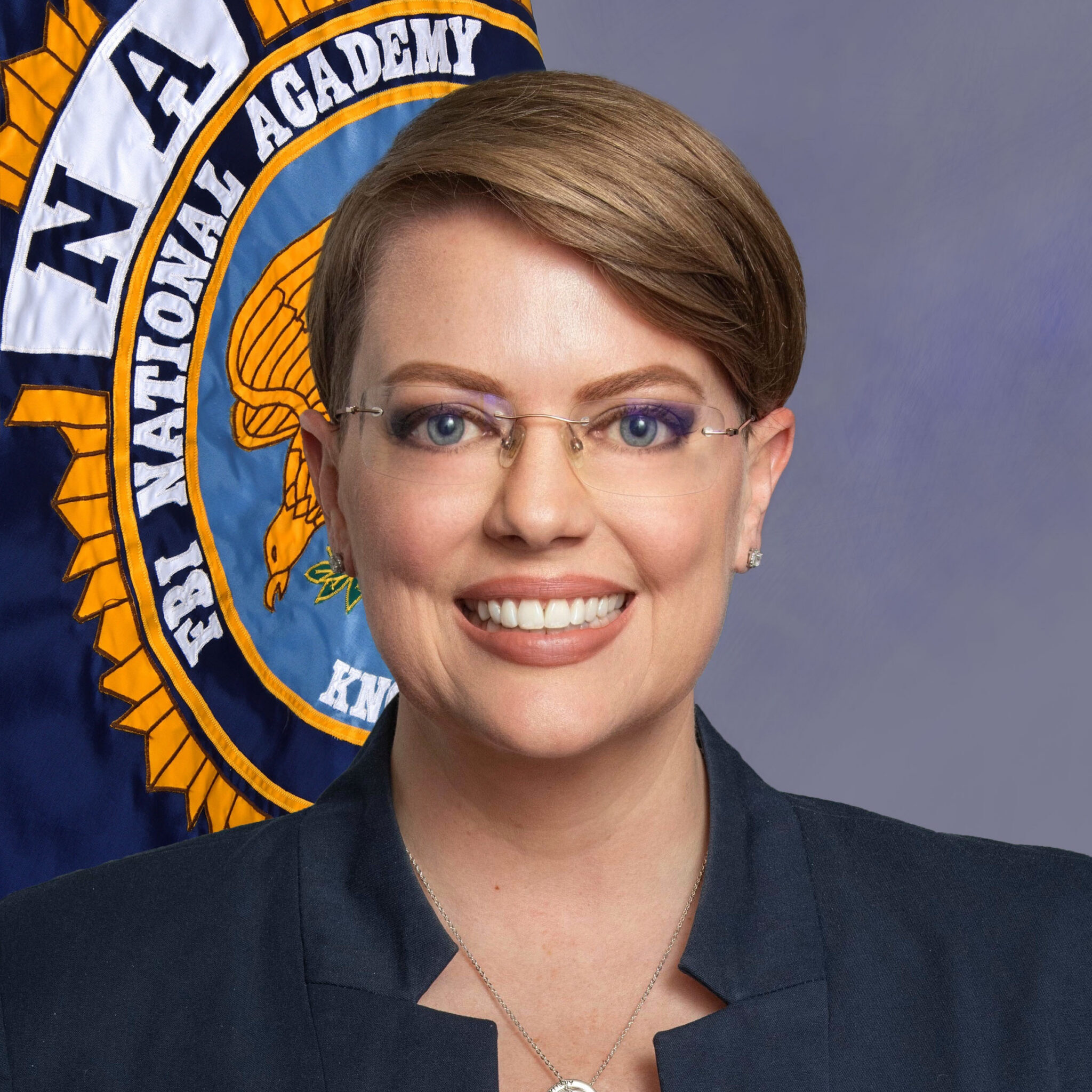
Kelly Robbins
Inducted May 2026
Nominated by Eric Dlugolenski, Central Connecticut State University
Biography:
Kelly Robbins is a decorated Captain and Commanding Officer of the 1st District for the Philadelphia, Pennsylvania, Police Department, where she has served in various capacities since 2007. She is a graduate of the FBI National Academy and holds an M.S. in Criminology from the University of Pennsylvania. Robbins is a National Institute of Justice LEADS Scholar and serves on the International Association of Chiefs of Police Research Advisory Committee.
Evidence-Based Research and Practice:
Robbins has been central to implementing several rigorous, documented scientific research projects within the Philadelphia Police Department and beyond. In his nomination, Eric Dlugolenski writes that in their first collaboration on a systematic social observation project to assess procedurally just policing, Robbins was the "linchpin" of the project, coordinating researchers and aligning internal and external stakeholders, while ensuring scientific standards were maintained, and the work remained operationally relevant. He praised Robbins' continued efforts in evidence-based policing, stressing that "few practitioners possess both the institutional credibility and the methodological sophistication to make such partnerships succeed; Captain Robbins consistently demonstrates both....[She] does not merely participate in research; she institutionalizes it."
Robbins is currently a co–principal investigator on an ongoing mixed-methods study of procedural justice in police vehicle stops using body-worn camera data and a project coordinator on a multi-site randomized controlled trial evaluating drones as first responders. This latter project involves partnerships with multiple universities and law enforcement agencies and represents one of the most ambitious experimental evaluations of emerging police technology currently underway. In addition to these efforts, she is also leading innovative projects that measure community sentiment through digital surveys and test Koper Curve–based deployment strategies to reduce auto theft. In each case, she ensures that findings are translated into policy, training, and operational decision-making.
Dlugolenski praises Robbins as "relentless in opening institutional doors, granting researchers access, encouraging experimentation, and taking principled risks within a large urban police department to test what works, what does not, and why. She is a law enforcement leader, a central architect of rigorous scientific research in her agency, and a tireless champion of translating evidence into practice."
Statement from Inductee:
I would like to begin by thanking the distinguished committee for bestowing this incredible honor upon me. Being inducted into the George Mason University Evidence-Based Policing Hall of Fame is both humbling and deeply meaningful.
At the risk of boring whoever reads this, I have a long list of acknowledgments for those who have contributed to my path. This is important, particularly for practitioners, as we are often in a world that does not encourage or intentionally support the level of rigorous evaluation celebrated by academic partners. Without this exchange of ideas, guidance in designing and analyzing data, and overall interest and support, much of this work would not be possible for people like me.
I am especially grateful to my friend and colleague, Eric Dlugolenski, for nominating me. His encouragement and steadfast support have been instrumental in my journey, and his belief in this work has continually pushed me to pursue it with greater purpose.
I would also like to recognize some of the mentors and institutions that shaped my path. The Honorable Laurie Robinson has been a relentless source of support and guidance throughout the years. The faculty at the Jerry Lee Center of Criminology at the University of Pennsylvania sparked my passion for rigorous evaluation and the pursuit of understanding "What Works," and what does not, in policing. I am grateful to Jerry Ratcliffe, Cory Haberman, and Evan Sorg for making complex statistical concepts and real-world evaluations not only accessible but genuinely engaging through the S.M.A.R.T. Policing program.
To my many colleagues and friends from ASEBP and LEADS, (particularly Renee Mitchell and Jessie Huff), thank you for sharing your ideas, energy, and for providing the opportunity to meet so many incredibly intelligent people.
To my family, thank you for your patience and encouragement as I endlessly talk through the research and ideas that inspire me. And to my colleagues at the Philadelphia Police Department, those who supported not only my efforts but also the broader movement to bring evidence-based policing into our organization: your partnership and friendship mean the world to me.
I believe deeply in the mission of using data and rigorous evaluation to drive and measure not just what we do in policing, but how and why we do it. If you share this mission but feel isolated or even actively opposed within your organization, my strongest advice is to “find your people.” Engage with communities like the American Society of Evidence-Based Policing. Reach out to criminal justice faculty at universities near your agency and build genuine, sustained partnerships. The exchange of ideas between practitioners and academics is not a luxury; it is the only way this work progresses.
Continue pushing that boulder uphill. There are days when the resistance feels greater than the progress. But the profession of policing will only be elevated if smart, passionate pracademics continue to nurture these relationships, operationalize research in meaningful ways, and refuse to accept the status quo. This work matters. Keep going.
I am truly honored by this recognition. I accept it with humility and a continued commitment to carrying this torch forward.
Contributions to Grants, Publications, and Projects:
- Dlugolenski, E., Huff, J., Robbins, K., Koehnlein, J., & Krane, K. (2024). Measuring “what matters” in 21st-century policing: Partnering with civilian oversight to assess procedurally just policing in Philadelphia. Police Practice and Research, 26(4), 428–449.
- Robbins, K., & McGough, M. (2026, April 16). Policing has a women problem — and it’s not the women. Police1.
- Robbins, K., & Robbins, V. (2025, May). Emergency Medical Services system data collection and assessment study: EPRIP data collection 2025 (final report). Vermont Department of Health.
- Schlager, M. D., & Robbins, K. (2008). Does parole work?—Revisited: Reframing the discussion of the impact of postprison supervision on offender outcome. The Prison Journal, 88(2), 234–251.
Links: